Tufting Yarn Cone Calculator by Color
Convert a total yarn estimate into whole cones for one color at a time. Account for yarn you already own and use the net yarn weight printed on the package. This purchasing calculation does not estimate the rug’s consumption rate.
Keep consumption and purchasing separate
Start with the grams you expect to use across the rug. Obtain that from a measured swatch or another estimate you understand. Next decide what share belongs to the color you are buying. The image calculator can help estimate the visible area of each color, but area share matches yarn share only when the colors use comparable yarn and pile settings.
If your background uses a different yarn or taller pile than your lettering, calculate those sections separately. A single 60% area input will not capture the difference. Use a color name and dye lot in your written shopping list so a numerical quantity does not become an order for the wrong shade.
Read the net weight, not the package size
Use grams of yarn, excluding the cardboard or plastic cone. A cone that looks large can contain less yarn than a smaller, more tightly wound package. Weigh remaining yarn without its support when possible, or subtract a known empty support weight. If you cannot estimate the usable remainder reliably, leave stock at zero and keep the remainder as a reserve.
The Craft Yarn Council explains yarn label symbols. The numbered thickness category is not the package's mass. Record the labeled length and net weight as separate values when comparing products. Convert ounces to grams before entering them here; one avoirdupois ounce is about 28.35 g.
A two-color order, worked through
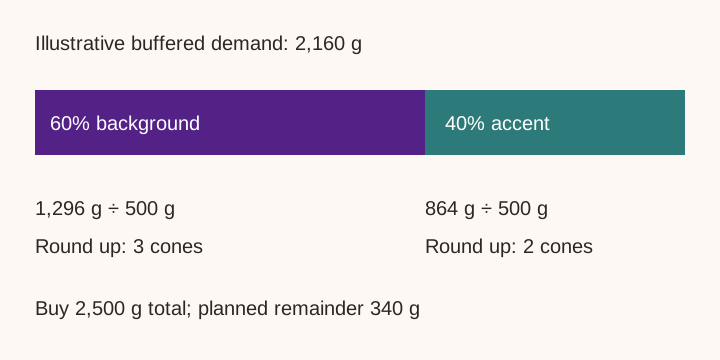
Assume an illustrative rug needs 1,800 g before waste, with 60% background and 40% accent. Choose a 20% allowance and 500 g cones. Background need: 1,800 × 0.60 × 1.20 = 1,296 g. Divide by 500 and round upward: buy three cones, containing 1,500 g. The planned remainder is 204 g.
For the accent, 1,800 × 0.40 × 1.20 = 864 g. Two cones contain 1,000 g and leave 136 g. The combined order is five cones, or 2,500 g. Although the buffered estimate is only 2,160 g, purchasing whole packages creates a 340 g remainder. That difference is package rounding, not a second waste percentage.
Subtract stock before rounding
If you already have 400 usable grams of background in the correct yarn and dye lot, the background shortage falls to 896 g. You buy two 500 g cones rather than three. The tool subtracts stock after calculating demand and the selected allowance. If stock exceeds demand, it reports zero cones to buy and shows the remaining stock.
Do not count the same remaining cone against two planned rugs. Reserve it against one project in your project record. Check dye lots and supplier availability before relying on a later top-up. Matching a product name does not prove two batches look identical beside each other.
Two strands do not mean twice this shopping list
If the total gram estimate already includes both strands, this calculator needs no strand multiplier. Feeding two strands can require two sources of the same color at the machine, but those sources need not each contain the full project quantity. Plan the feeding arrangement separately from the combined yarn mass.
Apply the allowance once. When your input total already contains a buffer, set the additional allowance to zero. Repeat the calculation for each color and check that the shares across your list add to 100%. This single-color tool cannot check the other colors you have recorded elsewhere. For an example connecting size, yarn, cloth, and ordering, read the 24 × 36 inch project plan.