A 24 × 36 Inch Tufted Rug: Worked Project Plan
Use this worked plan to connect the calculations before buying supplies. It describes a hypothetical 24 × 36 inch rectangular rug with two colors. The numbers illustrate a planning method; they are not measurements or photos from a completed Rytell project.
Set the boundaries of the example
The design fills a 24 × 36 inch rectangle: 864 square inches, or 6 square feet. The background covers 60% of that area and the accent covers 40%. Both colors use the same yarn construction, strand count, pile setting, and fill density. Those matching assumptions let us use area percentages as a first approximation of yarn percentages.
For this example only, assume a 6 × 6 inch test consumed 75 g across all strands. That produces a measured rate of 75 ÷ 36 = 2.0833 g per square inch. This chosen sample is different from the default sample on the swatch tool. Its purpose is to show how a different measurement changes the purchase order.
Scale the measured yarn
The rug contains 24 sample areas. Base yarn = 75 × 24 = 1,800 g. A 20% planning allowance adds 360 g, giving 2,160 g. Enter the sample dimensions and consumption in the swatch calculator to reproduce the result. Keep that allowance attached to the estimate so you do not add it again in the next tool.
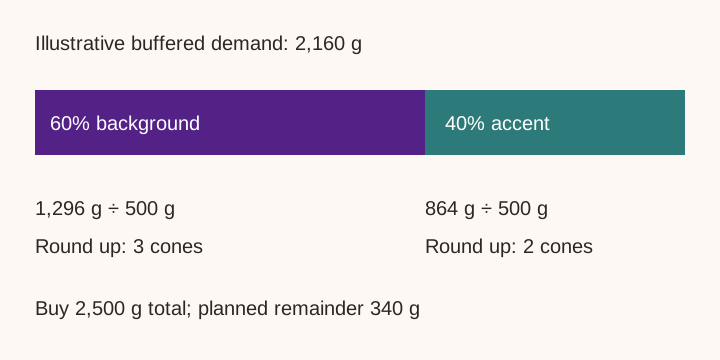
Split the buffered total: background 2,160 × 0.60 = 1,296 g; accent 2,160 × 0.40 = 864 g. Alternatively, enter the unbuffered 1,800 g total and apply the 20% allowance in the cone calculator. Both methods produce the same demands. Mixing the two methods would count waste twice.
Round each color to whole cones
| Color | Demand | Cones | Purchased | Remainder |
|---|---|---|---|---|
| Background | 1,296 g | 3 | 1,500 g | 204 g |
| Accent | 864 g | 2 | 1,000 g | 136 g |
You buy 2,500 g, leaving a planned 340 g after the buffered demand. A combined 2,160 g shopping target does not communicate that package rounding. Use the per-color cone calculator and record both colors. This calculation estimates quantity; it does not compare brands or guarantee that a cone will run smoothly through your machine.
Plan the backing independently
Assume the frame footprint you need to span measures 30 × 42 inches, and that your mounting setup needs another 6 inches beyond that footprint on each side. The primary-cloth cut becomes 42 × 54 inches. A usable 60-inch roll accommodates the 54-inch side across its width, leaving 42 inches along the roll. At quarter-yard sales increments, order 1.25 yards.
Use the cloth cut calculator to reproduce those dimensions. Confirm the design fits the frame's working opening with the clearance your machine requires. A footprint measurement alone does not confirm that clearance. The primary cloth includes an untufted gripping margin; that margin does not increase the 6-square-foot yarn area.
Reserve time and supplies the tools do not price
Record design preparation, sample making, tufting, trimming, backing, and cleanup as separate tasks. Follow the adhesive manufacturer's coverage and curing instructions for the chosen product. Do not substitute a blanket gallon-per-rug rule. Buy secondary backing and edge-finishing materials against the measurements their installation method requires.
Check the startup budget guide for equipment categories and the finishing guide for the next stage. This worked plan excludes shipping, taxes, equipment purchases, and labor rates. Supplier prices change, so enter actual prices in your own record rather than treating a model total as a quote.
Update the record after making the rug
Weigh leftover yarn by color and note whether the allowance covered your waste. Compare actual use with 1,296 g and 864 g, not with the full cone masses. Save the setup details alongside the result. If the next rug uses another yarn or pile height, make another sample rather than carrying this example's rate forward.
Suppliers also provide setup-specific benchmarks, such as Tuft the World's consumption example. Our arithmetic above does not claim to reproduce its setup. Your measured sample is the link between a generic plan and the rug you intend to make.