Tufting Backing Cloth Cut-Size Calculator
Enter the outside footprint of the frame area you need to cover, then add cloth for gripping on every edge. This calculator checks whether the cut fits across your fabric roll and rounds the length to the seller’s ordering increment.
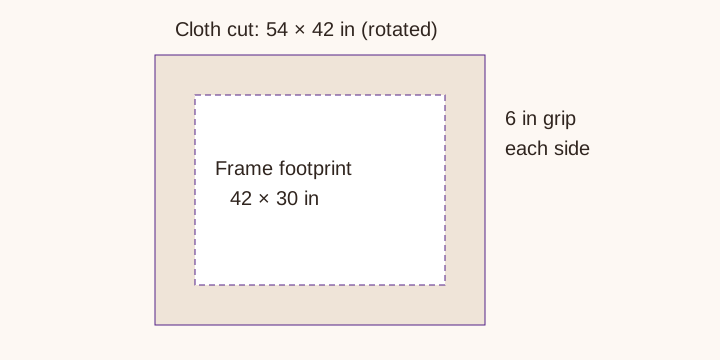
Measure the frame rather than just the rug
Your finished design, working opening, and outside frame footprint are different measurements. The design must fit inside the working opening while leaving room to operate the machine without hitting the frame. The cloth must cover the supporting frame and reach far enough beyond the gripping edge for you to tension it. Measure the footprint you actually need to span before entering dimensions.
The grip allowance here extends beyond that footprint on each side. It does not specify a safe machine clearance. Follow your frame and machine instructions for clearance and mounting. Tuft the World's mounting instructions describe stretching and securing the cloth. Use the allowance your own frame needs, not a universal number inferred from this example.
Calculate a cut that fits the roll
Cut width = footprint width + twice the grip allowance. Cut height = footprint height + twice the grip allowance. The tool then tests both orientations against the usable roll width. It chooses the orientation that requires less length along the roll. Rotation changes the weave direction relative to your drawing, so check the fabric instructions and keep its grid square when mounting.
For the illustrative 30 × 42 inch footprint and 6 inches of extra cloth per side, the cut is 42 × 54 inches. On a usable 60-inch roll, either orientation fits. Place the 54-inch side across the roll and buy 42 inches along it. That is 42 ÷ 36 = 1.1667 linear yards. At a quarter-yard ordering increment, round upward to 1.25 linear yards.
Linear yards are not square yards
A linear yard means 36 inches along the roll at its stated width. On a 60-inch roll, one linear yard contains 2,160 square inches, or 15 square feet. Dividing a cut's area by the roll's area can still suggest an order that cannot fit the rectangle. Width and orientation matter, which is why this calculator checks them before rounding.
If neither side fits across the roll, the result tells you to choose wider cloth or a smaller frame. It does not suggest joining scraps for the working surface. The tool plans a single rectangular cut and one frame; it does not nest multiple cuts, account for defects, or optimize an entire roll.
Check the seller’s actual dimensions
Use the usable width, excluding an edge you cannot grip or tuft. A listing may describe a precut panel instead of fabric sold by continuous length. Confirm whether multiple order units arrive as one continuous piece. If the seller ships fixed panels, compare the cut dimensions with the panel dimensions instead of trusting a linear-yard result.
Round once to the seller's increment. A tool result of 1.25 yards does not mean every supplier sells quarter yards. Change the increment to 0.5 for half-yard units or 1 for whole yards. If you need extra insurance for trimming or a damaged edge, increase the grip allowance before calculating rather than assuming the rounded order includes it.
Keep cloth and yarn allowances separate
Untufted gripping fabric consumes cloth, not yarn. Do not increase the rug's yarn area just because the backing cut is larger. Add yarn only for areas you plan to fill, test patches, or other actual consumption. This distinction prevents a common double count when transferring frame dimensions into a yarn calculator.
Before cutting, write the frame footprint, grip allowance, roll width, orientation, and final cut on your project record. Read the primary and secondary backing guide for material choices. Secondary backing, edge finishing, and adhesive coverage require their own measurements; this primary-cloth calculation does not order them.